
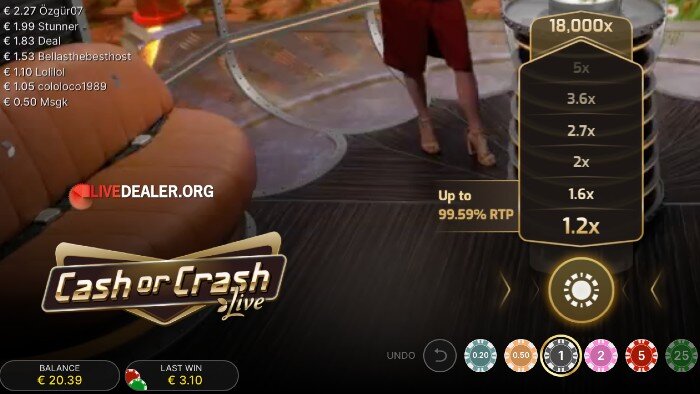
Cash or Crash Live carves its own space in the world of live game shows. Its charm resides in a potent mix of visual spectacle and game mechanics that transforms every round into a test of your nerves. This isn’t just a spin of a roulette table. In this experience, you are in the pilot’s seat, making active choices that influence your payout. The premise draws you in with a rising multiplier, then urges you to cash out before a hidden “crash” resets everything. To get the most out of the game, you should see beyond the flashy show and understand its actual mechanics. Let’s break down the rounds, the host’s role, the odds involved, and how players can practically navigate the thrills.
Conclusion: A Harmony of Chance and Choice
Cash or Crash Live is a fascinating combination of absolute chance and intentional decision https://cashorcrashcasino.com/. Its structure are designed to weave a narrative of increasing risk, driven by a transparent RNG and animated by a engaging host. Defining success as a fun and possibly rewarding session depends on several factors. It’s less about forecasting the uncertain and more about grasping how the game is designed. It calls for controlling your money with restraint and managing the mental impulses the game skillfully stimulates. By mastering its phases, understanding its numeric basis, and sticking to a individual strategy, you can alter your perspective. You move from puzzled guesswork to knowledgeable engagement in a uniquely tense live game show.
The Main Goal and Core Mechanics
The objective of Cash or Crash Live is straightforward on the appearance. You need to choose when to exit a growing multiplier before a secret “crash point” terminates the game and removes your earnings for that phase. Each game commences with players making bets. A rocket then begins its flight, and a multiplier commences climbing from 1x. The journey has several levels. Before launch, a unknown crash multiplier is chosen for each stage, hidden from all players. As the multiplier increases, players individually chooses to hit “Cash Out,” locking in that multiplier on their stake, or to remain. If the rocket hits the secret crash point prior to a player exits, they surrender their bet for that phase. The pattern of hazard and profit repeats over several stages. Players who survive grow their profits incrementally.
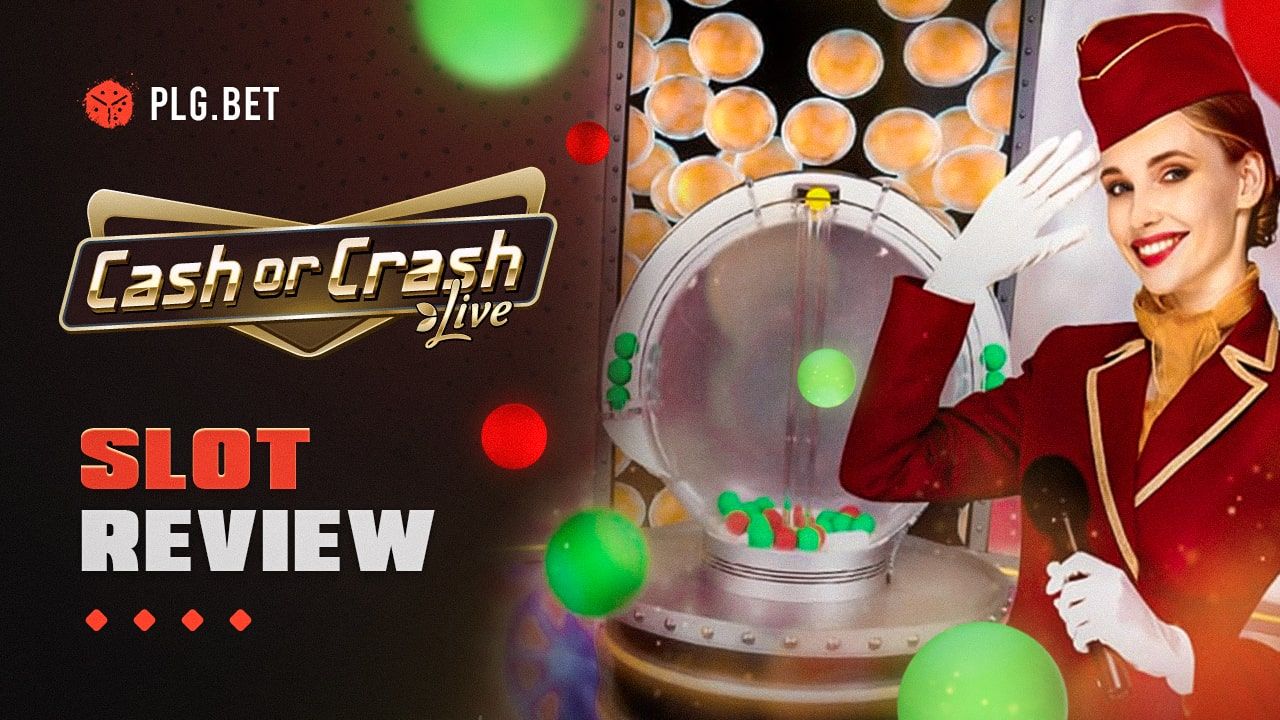
Deconstructing the Game Phases
Think of the game as a sequence of separate sections, every one a brand new gamble. Staying alive doesn’t eliminate you. You proceed to the following stage with your accumulated winnings secure, then start the risk cycle from scratch on the next leg of the rocket’s flight. This structure is critical. It builds a drama, with tension that intensifies as you go. The presenter heightens the tension, revealing how many players are still aboard the rocket as the multiplier hits impressive values. Initial phases often see cautious plays. Subsequent phases, with their high-stakes multipliers, tempt you to risk the gains you’ve already secured. This segmentation is the heart of the game’s drama. It creates a sequence of independent, high-pressure decisions instead of a single one.
From Safe to Dangerous: The Risk Escalation
Pay attention to the colorful route the rocket takes. It’s a core part of the game’s language. The opening segment is typically a “Green Zone,” a lower-risk phase where a crash is still on the table. Afterward, the rocket could reach an “Amber Zone,” a obvious signal that hazard is rising. The concluding section is the “Red Zone.” Here, multipliers appear their highest, but the chance of a crash is numerically at its peak. Such visual cues are not just cosmetics. They provide a immediate indicator for the degree of risk at any given time. They transform an abstract probability feel concrete. Understanding the game is purposely informing you about growing risk is a critical piece of game strategy.
The function of the on-air host and RNG
The live host is more than just talk. They establish the game’s emotional pace. While they can’t affect the result, they expertly build suspense. They shout out the climbing multiplier and provide live updates on what percentage of the crowd is cashing out at each level. That social cue can mess with your head. But remember, the host works separately from the game’s engine: the Random Number Generator (RNG). The crash point for each stage is established by a certified RNG the instant the stage begins. This assures fairness and total unpredictability. The host has no clue when the crash will happen. Their job is entertainment. The RNG’s job is certifiable fairness. This combination merges transparent live action with provably random results.
Strategic Frameworks and Gambler Mindset
No tactic can defeat the core randomness. But you can use systematic techniques to manage your money and your mental state. The central dilemma is a exchange. Do you guarantee guaranteed profit, or pursue exponential growth? Users often adopt strategies like the “Fixed Cash-Out.” With this approach, you determine ahead of time to settle at a particular multiplier, say 2x, in every round. This targets steady, small wins. The reverse is the “Let It Ride” method, where you risk many phases for a shot at a monster payout, acknowledging that losses will occur. A more calculated approach is the “Percentage Bankroll” method, where you modify your stake based on your present profits. The most important element, though, is in your head. Can you fight the “greed factor” when the payout rises? Can you avoid frustration after an early crash? Your best weapon is creating strict rules for yourself before the game even starts.
Common Pitfalls to Avoid
Watch out for a few common errors. The most harmful is “chasing” a crash. This involves rashly raising your bet after a loss, which goes against the game’s round-independent nature. Another mistake is falling for the “hot hand” illusion, believing a run of large ratios is probable to continue. Allowing the presenter’s chatter or the behavior of other participants distract you from your own pre-set plan is widespread. Also, do not misunderstand the sections. The Amber and Red Zones aren’t challenges to beat. They are alerts that the danger has jumped. Entering any stage without a specific aim turns the activity from a series of choices into a complete emotional journey. That ride hardly ever concludes favorably.
Mathematical Basics and Variance
Let’s look at the data that power the game. The crash point for each level is based on a fixed statistical distribution. Common, lower multipliers for instance 1.2x or 1.5x have a high probability of being chosen. Extremely high multipliers are achievable, but they are exponentially more improbable. This system keeps the game balanced. The frequent, small crashes pay for the infrequent, massive possible wins. The RTP figure is a theoretical percentage spanning millions of rounds. In your single session, the fluctuations are extreme. You aren’t betting against the house in a standard manner. You’re acting against a concealed, random value. Keep these key facts in mind:
- Independent Stages: Every round’s crash point is an independent occurrence. A 1.2x crash in the first stage does not predict the second.
- No Predictable Sequences: The RNG eliminates any predictable patterns. Historical crashes or big wins do not influence what comes next.
- House Advantage: The game is designed with an inherent house edge, which is evident in the provider’s published RTP.